Showing posts with label exercise. Show all posts

Tuesday, 18 August 2015

Making a Cardiac Comeback

How will you write your comeback story?

A question that has plagued me since I survived a sudden out of hospital cardiac arrest in March 2014. Mine, now anyway, is more an of existential question, of finding a way to make the shock and struggle mean something, a way to help other people, a way to have an impact on the world. But for a lot of people in the same boat, including people dealing with heart disease, it's more practical than that. It's about achieving a certain level and quality of life on a daily basis that someone without health issues most likely takes for granted.

Last Tuesday (11 August) I attended the ICD Support Group at Royal North Shore Hospital. I'd been to a couple before, but this one focused on the guest speaker Dr Samuel Sears from East Carolina University. Dr Sears is a Clinical Psychologist who specialises on the psychological care of people living with an ICD. You can access his bio here.
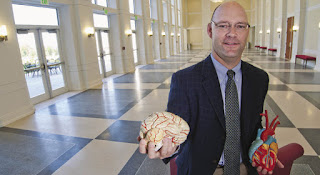
Apart from being a really warm, funny, approachable and knowledgeable guy, what became abundantly clear is his passion for the area of mental health for patients with ICDs. This is the area I struggled with the most post my cardiac arrest so I too am very passionate about it. It also seems to be an area lacking in Australia. As far as my knowledge extends, there doesn't seem to be someone like Dr Sears who specialises in a combination of cardiology and psychology. Specialised care has to be sought independently for either a psychologist or psychiatrist through a referral from your GP or Cardiologist. It was therefore refreshing to meet and listen to Dr Sears speak about this topic because he understands both sides of the coin: the mental and physical.

His focus is on providing his patients confidence in facing their fears and struggles in the face of threat. Some challenges that ICD patients have to tackle include:
  1. Coping with their cardiac condition
  2. Coping with an ICD
  3. Resuming activity and quality of life
In the face of the above challenges, the aim of his talk was to: increase our understanding in what it means to be confident; as well as activate one strategy that each audience member believes will help them lead a more confident life.

Dr Sears presented findings from some recent medical studies.The gist of some of these was the discovery of distress, depression and anxiety experienced by patients with ICDs and their families; and the constant fear they live with which inhibits them from living their life. Furthermore this fear leads to a lack of engagement in activities. The most profound study presented was that of exercise and ICDs conducted over 2.2 years and on 98,000 patients. The discovery was that on average, these patients moved less than 2 hours per day, which means they spent at least 22 hours per day not moving. When the survival rate was looked at in terms of most active versus least active, the study concluded that the most active patients were most likely to be alive four years later. When talking about activity we're not talking anything complicated or extreme either - just some form of basic movement, as opposed to being sedentary. Conclusion: some, any movement is better than none.

In fact, data now suggests that doctors have been too safe with the prescription of types of activities that heart/ICD patients can partake in. What they do know is that muscles, joints, the human body and mind have been designed to function better as a whole with movement. Of course it is important to note that competitive athleticism remains very much a grey area and clinical judgement should be made by a cardiologist.

Dr Sears eloquently went on to discuss confidence in cardiac patients, how to achieve quality of life, and perceived safety and confidence in the context of threat. Some standout points:
  • Quality of life (QOL) is personal and point in time dependant
  • Your definition of QOL is under your control
  • Confident living is the fuel for the achievement of QOL
  • Arrhythmia is random, don't know for certain what causes it
  • Doesn't matter what causes arrhythmia, but you have strategies to keep you safe (medicines, ICDs and monitoring)
  • Can't control arrhythmia but don't allow it to control you!
  • When it comes to confident thinking and living, work out what activities are your goal, and work towards these
  • These activities should make you feel alive and well. Think about what activities you liked to do in the past, before getting an ICD or having an ICD shock?
  • Be proactive, test the limits safely
  • ICD gives safety to make a cardiac comeback, essentially helping you deal with a condition that is spontaneous, unpredictable and potentially life threatening
  • QOL is an achievement, not an entitlement
  • A shift from victim to survivor reduces stress
  • Mental health is what we believe about the future; it's earned and deliberate
  • Have an ICD shock plan
  • Foster confident relationships by creating intimacy and finding ways to feel closer to the people who love you
People with heart disease are faced with their own mortality in a very real and immediate manner. Heart disease which some may think makes you weaker, actually makes you stronger. Regardless of the adversity in your life it's up to you to decide whether you face it as a victim or a survivor.

That's a lesson I learned early on in life and I guess what drives and motivates me to take action rather than sit back and be a passenger in my life.

So what was my one strategy I took out of this presentation that will help me lead a confident life? It was the reassurance that I'm doing everything I can possibly be doing to prolong my life: medication, ICD, regular monitoring by my cardiologist and GP, regular exercise, balanced eating, minimising stress, and most importantly taking time out to have fun and create and enjoy wonderful moments with the people I love.

How will I write my cardiac comeback? I think the above is a damn good start. Only time will tell what happens and evolves beyond that.
----------------------------------------------------------
Some interesting facts and statistics:
  • The first human ICD implant occurred in 1980.
  • There's 4-6% chance of and ICD shock in an average year.
  • Activity avoidance in kids is 84.5% and 39-55% in adults.
  • A weaker heart (e.g. 35% ejection fraction) has a tendency to act irregular.
  • Risk of driving in ICD patients is the same as other people - it's equally as dangerous.
You can view a similar presentation that Dr Sears has done before, The Medical Trapeze: Living Confidently With a Safety Net.

Saturday, 7 March 2015

Inaugural ACHD Education Day

Saturday 21 February 2015 marked the Inaugural ACHD Education Day. The event was run by HeartKids and held at the Mercure Hotel in Sydney.

Considering it was the first ever event of it's kind, the day included a good mix of content and professionals as speakers, including:
  1. Professor David S Celermajer AO FAA (Cardiologist at RPAH; Head of Cardiology at University of Sydney; and Clinical Director of the Heart Research Institute)
  2. Associate Professor Edwin Kirk (Clinical Geneticist)
  3. Dr David Tanous (Cardiologist at Westmead Hospital)
  4. Dr Rachael Cordina (Staff Specialist in Cardiology at RPAH)
  5. Adjunct Associate Professor Amanda Gordon (Clinical and Health Psychologist)

Image courtesy Uni of Sydney
Professor David Celermajer was clearly the draw card for the day and (not surprisingly) it became quickly evident how knowledgeable and well respected he is in his field, as well as what a huge advocate he is of adult congenital heart disease. His expertise in the field of ACHD has not been an easy or short feat - it has taken him 16 years to fully qualify; illustrating his dedication and passion for his life's work.

He began by going through some startling statistics and facts, which I've summarised below.

During the 1970's and 1980's, it was mainly just children with congenital heart disease. There are now more adults with congenital heart disease than children. In the 1970's only simpler heart problems could be fixed whereas now, almost anything can be treated. This means a much higher survival rate and therefore adult population with CHD.

NSW has approximately 10,000 cases of adults with CHD.
  • Only 2,500-3,000 of these cases are seeking or have sought care in an expert ACHD centre.
  • There are 500-600 new cases of CHD which join the adults annually, increasing in number and complexity.
In Australia there are 55 cardiologists specialising in children with congenital heart disease vs. only seven cardiologists specialising in adults with congenital heart disease. I found this fact astounding, which further confirmed why I had such trouble finding a specialist cardiologist for my personal care. Not only are there not many ACHD specialists in Australia, in my view (and this may now be changing), there also seems to be little awareness by generalist cardiologists of the ACHD specialists that do exist.

The ACHD population is expected to grow 5% p.a. Translating to one in 150 people having some form of congenital hear disease, or 6-7 per 1,000 live births (including congenital problems which appear later in life).

Professor Celermajer also explained different heart conditions, which was really interesting. These were by no means definitive, but clearly outlined how every CHD case is complicated and so very unique.

Apart from caring for his patients, university and Heart Research Institute commitments, Professor Celermajer has also dedicated (it seems a vast amount of) time to establishing comprehensive adult congenital heart disease centres, which I've now listed on my blog. Furthermore he's been working intimately with the Cardiac Society of Australia and New Zealand to develop a paper outlining recommendations for the standards of care for adults with CHD. This is a massive piece of work and it's required due to the massive struggle that exists with transition of care from children to adults, which is something I can relate to. The main points outlined in this paper are:
  1. ACHD is a relatively new and rapidly growing area of need.
  2. The recommended (adequate) standards of care.
  3.  Whole life planning (holistic care).
  4. Paediatric patients transitioning to specialist care centres for adults when they come of age.
He had opened his speech by stating what a burden it is living with ACHD. With those words I felt a massive relief to know that someone else really understands, through his experience and exposure to ACHD, what I and everyone else there present in that room, go through on a daily basis. He came full circle and closed his talk by outlining some of the psychosocial aspects affecting patients with ACHD, which are highly important as they apply to our day to day living:
  • exercise
  • employment
  • insurance
  • intellectual and social development
  • contraception and family planning.
As CHD patients there isn't much we can do about our physical limitations, but we do have to make daily decisions about other factors in our life and have to always take into consideration how these affect our CHD. All the technical and academic aspects aside, what really stood out for me was the empathy Professor Celermajer feels for patients with ACHD. It is comforting to know there are people out there that understand and that we have the established ACHD specialist centres where adults living with CHD can get tailored care and assistance for all areas in their life.

Associate Professor Edwin Kirk spoke about his area of specialty: genetics. He's been interested in genetics associated with congenital heart disease for over 15 years. Most of the information went over my head and there were a lot of charts used as visual aids, so difficult to transcribe. Basically what I took out from that presentation is that genetics is such a wide area of study and so complicated, that, to simplify, there's not much that they actually do know. CHD is due to multifactorial (meaning many factors) inheritance. They think it's approximately 70% genetics and 30% environmental. 1% of babies born have a chance of having some form of CHD.

What I understood from this information is that unless there is a clear pattern of heart disease in your family tree, then the reason you have it is most likely random, pure and simple luck.

Image courtesy zoominfo
Dr David Tanous specialises in CHD and pregnancy, having completed a fellowship in congenital heart disease and heart disease in pregnancy at the University of Toronto. He too had some interesting facts to share.
  • The female body works extremely hard during pregnancy, there's a 50% increase in fluid volume, 30-50% increase in cardiac output and 30% increase in heart rate. It's between 28-30 weeks where the cardiac output peaks. These factors can have a massive impact on someone healthy, let alone a woman with heart disease.
  • The risk of transmission of heart disease to offspring is 3-5%.
  • Caesarian-section is not proven to be a better delivery method when it concerns the load on the heart. 
  • There is added complexity when anesthetics are thrown in the mix. 
  • Certain medications can impact a fetus adversely.
Therefore a good assessment before pregnancy is far more important, with preconception planning preferable. There needs to be a team approach to ensure that all the factors mentioned above (and more) are taken into account, including but not limited to:
  1. Cardiologist
  2. Obstetrician
  3. Anesthetist
  4. GP
Some useful resources Dr Tanous shared are listed below.

Mothersafe - NSW Government service assisting patients and their healthcare providers with concerns around exposures during pregnancy and breastfeeding

Heart Disease and Pregnancy - resource for patients and healthcare professionals outlining the risks and management strategies associated with pregnancy for women with heart disease.

Image courtesy HRI
Dr Rachael Cordina is the newest addition to the RPAH team and her passion lies in ACHD and exercise.

Patients with ACHD are automatically at an increased risk of being overweight and inactive. This can be due to many reasons such as being wrapped in cotton wool from early in life, or physical limitations or symptoms which make it difficult to exercise.

The good news is, habitual exercise has been shown to have a greater impact on fitness and exercise capacity than the heart muscle function itself. A tiny bit of exercise is better than no exercise at all, for example a slow walk for 10 minutes per day.
  • The recommendation is that people with CHD should complete an exercise test to determine their peak heart rate, as there is no clear cut formula.
  • Some sporting activities can be fatal to people with certain heart conditions. Always speak to your cardiologist to obtain approval for undertaking any exercise program or physical activity. 
  • Even people with complex heart issues can exercise, but this needs to be done in a supervised environment under specialist care (exercise physiologist) with a tailored program.
  • People with defibrillators and pacemakers should avoid contact sports and long distance swimming.
  • Everybody with CHD can benefit from regular exercise.
Exercise and CHD is an area I too am very passionate about. Prior to my pregnancy and post my cardiac arrest, regular exercise helped me not only physically, but also mentally. I feel like it's one of the few positive things I can do to help my condition. In most cases it won't cure your condition, but it is a great preventative measure to help keep other problems or complications at bay. After my cardiac arrest I had a major realisation: just because I have CHD, does not mean I am exempt from other health issues. I don't see the point in exposing myself to greater risk of anxiety, cholesterol, diabetes, obesity, heart attack, or osteoporosis. So the only thing I can do is minimise these risks by exercising.

Image courtesy Armchair Psychology
Adjunct Associate Professor Amanda Gordon is a clinical and health psychologist in private practice, helping individuals with chronic illness and their families manage their lives and relationships. She began by emphasising the mind and body connection, that both are equally as important. Congenital heart disease although limiting, is not visible. So this makes it harder for others to empathise or understand. Surely, if you look fine, you must be fine?

The main areas covered for someone suffering from a chronic illness were:
  • nurturing your relationships
  • coping strategies
  • self care
  • building a support network
  • managing loss and grief
Some helpful advice summarised below:
  • Be informed about your disease, the more you know, the better you'll do.
  • Accept limitations, but also the gifts.
  • Positive psychology: focus on what's going well, rather than what is going wrong.
The three blessings is a technique Professor Gordon shared to help remain positive. It consists of keeping a gratitude journal, where you write three good things that happen every day. This can be a reference for your yourself when you are having a bad day or period, or something to share with your loved ones. Three x 365 days in a year =  1,095 great things to look back on every year.  

I'm a strong believer in our emotional well being having an impact on our health and manifesting physically. I think the three blessings can be a good technique particularly if negative thoughts tend to usually overpower the good ones, it helps refocus. Why spend our precious time being miserable...?

I am also very passionate about mental healthcare in general, but particularly when suffering from a chronic illness or having experienced a traumatic event. Mental well being is a minefield.  The information presented above is overly simplified and high level and perhaps, not as practical or tangible as some people may require it to be. Every person's condition and experiences are completely unique, so like physical exercise for an adult with CHD, I believe that tailored care is required. And seeing a psychologist, psychiatrist or counsellor one on one will be able to provide this specialised care, consisting of advice and techniques that should work for the individual.

Finally Jann Kingston, the CEO of Heartkids gave a short talk. She explained this day was organised because there was a demand for it because once heart kids grow up, there is nowhere to refer them to. Heartkids are working on a registry for CHD, this will help collate data to be able to develop further services and help people with CHD stay connected to these services.
 

The key points from the day for me were:
  1. ACHD is a growing area increasing in size and complexity. Holistic care is required from cradle to the grave, encompassing all areas of life.
  2. If you're suffering from CHD, ensure to be seen at least once by an established ACHD centre listed here.
  3. Prevention is better than cure in context of pregnancy and ACHD. Pre-plan and enlist a team approach to managing your pregnancy.
  4. Some exercise is better than no exercise.
  5. Always speak to your cardiologist to obtain approval for undertaking any exercise program or physical activity. If possible, speak to an exercise physiologist for a tailored program.
  6. Best to be well informed about your personal condition and state of health.
  7. Nurture and look after yourself.
Some concerns, observations or comments that came up from the audience on the day were:
  • There is no comprehensive guide of all heart conditions.
  • There isn't a comprehensive list of cardiac programs or exercise physiologist gyms where adults with CHD can go to.
  • Physicians need resources as much as patients do for example regional or non specialist doctors.
  • Lack of quality information to help increase medical support and funding.
  • No official organisation for adults with CHD.
  • People are uninformed about the services available to them.
  • Not sure of the best channels of communication.
  • Development of some sort of mentoring program for children and adults with CHD.
  • The clear need for a support group. The most frequent comment made by attendees was how good it was to connect with other adults suffering from CHD.
The intention is that this will become an annual event, the success and likelihood of which was pegged on this first off event in Sydney. Many of us suggested that we looked at moving it around Australia, so the location is not static and the event can be accessible to more adults with CHD.

All in all it was a wonderfully informative and touching day. Apart from learning many interesting facts and how to access some very useful resources, it was the connections with people that affected me the most. Some people shared some very personal and painful stories and for their (and the speakers') openness, experiences, love and kindness, I thank them.

Wednesday, 30 July 2014

Support Group at RNSH

A couple of weeks ago I attended a support group at Royal North Shore Hospital (RNSH). It was primarily aimed at an "older" audience, although there was another lady near my age, Kim, who also attended.

It became very clear that not only different age groups, but also people, have different concerns and at times approaches to life and living with an ICD. The best example of this was an older patient exclaiming that she used to do everything right and still had a cardiac arrest. So post arrest and having an ICD inserted, she no longer takes things too seriously and instead indulges in a nightcap or two...on most nights. I guess we all have different ways in dealing with things, and major events like a health scare can motivate us to live life quite differently to the way we did before.

Kim pointed out this difference and outlined that due to having two young kids to look after (plus heart health complications), her concern is prolonging her life as long as possible. So for her, there is no indulging in a nightcap or any alcohol in fact at all, ever.

Myself on the other hand, I like to employ the more balanced French/Italian/Greek way of living: having the odd small glass of wine with a meal. Good for the blood and circulation I say!

There were two speakers organised for the day:
  1. The lady spoke about needing to understand everything that was (medically) happening and taking control over her own care.
  2. The man spoke about having a complete life turnaround. He used to be a high-flying successful business owner who worked too many hours, didn't exercise and ate and drank really badly. Since his arrest he's sold his business, exercises 5 times a week and enjoys spending a lot more time with his family and friends.
It was interesting to see the differences between the two speakers. The floor was also opened up to the audience over a lead discussion, as well as a question and answer. Even thought quite a few experiences were revealed, it was reassuring to see the differences and also know that most people felt very similarly about having and living with an ICD. I think it's important to connect with others going through a similar experience so you don't feel as isolated or alone. Family and friends can be supportive but unless they've been through the same experience, they just don't get it.

As much as I need to understand what's logically going on with my heart and why what happened did happen, I'm afraid there aren't any certain answers for me. I've been working hard to let this go so I can go on with my life and live without fear. So I've taken the more high-level, focus on what I can control type of approach. Similarly to the gentleman speaker, what has changed drastically for me are my values and consequently the way I live my life. I've given myself no option but to prioritise regular exercise (3-5 times a week). I feel that's one major positive thing I can do not only towards my recovery, but more importantly for my long term health and vitality. Never before in my life have I had this clarity, motivation and dedication towards my exercise and well being. As the noise drops away, things seem a lot more simpler too and life more enjoyable.

I'm looking forward to attending the next ICD Support Group at RNSH later this year. It's supposed to be aimed at a younger target audience and have a large focus on exercise with an ICD. I bet I will have a lot to offer to the conversation!

Sunday, 22 June 2014

Physical Afflictions

End of June marks three months since the cardiac arrest.

Apart from the mental which I've started to delve into, there is a series of physical afflictions I've been dealing with in relation to the arrest. I have only felt comfortable sharing these now and I do so with some hesitation, but feel that I need to in order to continue on the path of healing. 

I saw my chiropractor Luke on Saturday and finally had a long overdue adjustment. Based on Luke's advice, I couldn't get my left side adjusted earlier than eight weeks after the ICD insertion, but didn't feel comfortable, mentally or physically ready to get any adjustments done until now. I've been feeling stiff and sore in different locations in my body, particularly after laying in bed and sitting around for three weeks after getting the ICD put in (which was approximately one week after the arrest). The cardiac rehabilitation program with the physiotherapist has helped, but new injuries/issues arose (e.g. hips out of whack, so kept getting a sore knee when training). I really needed an adjustment and now feel so much better for it! There were a lot of blockages, particularly (and not surprisingly!) on my left side and top half of my body.

The ICD was inserted in the left sub mammary pocket. It's usually inserted underneath the left collarbone and noticeably protrudes under the skin, but since I have a zipper scar running down the middle of my chest; and my left breast plate protrudes more than the right (both from my open heart surgery in 1988), I wanted to avoid bringing even more attention to my chest. 

For the first six weeks after the ICD insertion, I wasn't allowed to lift my left arm above shoulder height. Even if I wanted to I couldn't, because there was a lot of soreness from the operation and felt the strange sensation of the ICD leads pulling with any sudden or lifting movement. They needed time to fuse with the tissue and this takes about six weeks.

Apart from the internal stuff, I have two external scars from the surgical incisions: one close to my left collarbone where the leads were inserted; and one underneath my left breast where the ICD was inserted. Also, I have a significant scar on the left side of my neck (looks like a massive pimple) where the IV was inserted while I was in intensive care.

The whole underneath of my left breast was severely bruised from the operation and because of this and the incision underneath it, I couldn't wear a bra for four weeks.

My chest was constantly sore from the CPR, which had caused me to have fractured ribs. These can take at least six weeks to heal. Every time I breathed in I would experience sharp pains. So I got used to a shallow, half breathing type of constant state to minimise the pain.

I couldn't sleep on my front (it's my preferred go-to-sleep position) or left side, so it was impossible to get comfortable and often to fall asleep.

I had bruising and track marks like a junkie, running up and down my arms from the IVs in hospital and daily blood tests I had for two weeks while I was admitted.

I had (and still have, but somewhat slightly calmer now) pimples on mainly my neck, but also my face, back and backside from the stress from the whole event. I feel like I'm going through puberty...again. It wasn't fun the first time and it's not fun a subsequent one.

Most importantly, from being bed-ridden for a month, apart from the stiffness, I became totally unfit and struggled to even go down the twelve stairs in our building to get to the ground level. Not to mention the constant tiredness and low energy levels.

On Friday I graduated from the Cardiac Rehabilitation/Heart Failure Program at St George Hospital. I got quite emotional and upon reflection, realised what a massive milestone it is for me, particularly taking all the physical afflictions listed above into consideration. It feels like a massive achievement because I've come so far from being a fragile post operative and cardiac arrest patient, to being well on my way to feeling strong, fit and energetic again.


The visit to Luke and a couple of things he said got me thinking a lot about all these physical afflictions and how I feel about the ICD. I was hugging Chris the other night and could feel it there  between us. I feel it every night I lie in bed on my left side to go to sleep. It still feels so foreign and strange, a part that doesn't belong to me but yet is connected and vital. It's such a strange duality to experience and with time, one that I need to accept as being part of me.

I've come a long way but now realise that it's just the beginning. There's still a lot of work to do and these things can't be rushed, particularly the mental aspects. I'm just taking it one day and one milestone at a time; and practicing my deep breathing.

Wednesday, 28 May 2014

Healthy Body, Healthy Mind

St George Hospital have a Healthy Heart Program run by physiotherapists at the hospital's onsite gym. I'm currently half way through my fourth week of physical rehabilitation. The program runs for six weeks total.

On the day of my cardiac arrest, the ambulance officers had taken me straight to St George Hospital and I stayed there in ICU until being transferred a few days later to RPAH, where I would be monitored by my cardiologist and getting the defibrillator inserted. I only vaguely remember someone slipping me a pamphlet and explaining the program while I was getting packed into the ambulance to head to RPAH.

It was weeks later before I came across that same pamphlet, on top of my washing machine of all places. I knew then I had to follow up but didn't do anything about it. The truth is I didn't feel ready to even think about the program, let alone sign up for it. A few days after this, the coordinator rang me to see how I was going and give me more information. It was really kind of her, I really needed her to organise it all for me and she did, it was the gentlest ever nudge to get me on the road to recovery. I'm so glad she persisted.

I didn't know what to expect and it all seemed overwhelming. Some previous gym sessions have not proved very fruitful or enjoyable. Once I gave a personal trainer a try. She totally ignored my heart condition and any information I gave her about myself (so much for the survey!) and got me (trying) to do chin-ups on a bar. WTF? Anyone who knows me personally will know that that type of exercise is not for me. Needless to say I never went back to that personal trainer. So much for personal...

Anywho I digress. I went to the Healthy Heart Program with an open mind and with time, have found my heart has totally opened to it too. I love it. I don't want to miss a session. It's on twice a week. My session group is on Tuesdays and Fridays in the afternoon. It's an hour of me, the machines and my music. I get the opportunity to clear my head and in a comfortable, caring and encouraging environment, to heal. Although I'm the youngest person in the group, I feel right at home. Everyone is so lovely and there to do the same thing as me: heal, learn, escape, exercise, be healthy.

The gym session is essentially run as a circuit. The circuit includes bike, treadmill, leg presses, leg weights, stepper, and free weights, amongst other things. Prior to starting the exercise program, I had gone in for an assessment where we discussed my case and requirements. Therefore every exercise is then specific to each person in resistance, weight and freedom of movement. The exercises are usually limited to six minutes each or three repetitions of eight, 10 or 12. Or in the case of the stepper (which I progressed to this week from the ordinary steps) for me, three repetitions of 30 seconds each. We all have a personalised exercise plan, which has been created by one of the physiotherapists. After each exercise one of the nurses/physios will check our stats (BMP, oxygen levels, blood pressure) and record them, so we are constantly being monitored. The fitter that everyone gets as time progresses, the more the exercises are increased in intensity, offering a slow and gradual build up.

On Tuesdays after the gym session, they also offer an hour education session with a different topic every week including: physiotherapy and general recovery information, occupational therapy and nutrition.

The Healthy Heart Program has done wonders for my confidence. I feel more strong, energetic, alert, connected, focused and fit. I feel safe and have around me people who are going through a similar experience. I also have goals again such as continuing exercise to be fit, healthy and to strengthen my heart. Currently I've committed to two gym sessions and two (long) walks a week (due to our increasing sedentary lifestyles we should all ideally exercise seven days a week, even if it's for half an hour). I've increased awareness around my nutrition and am once again focusing on losing the left-over post-pregnancy weight (something playing on my mind constantly and reinforced by my cardiologist on my last check-up). Excess weight has been directly linked to heart disease and problems.

The group varies and includes people who have recently had a quadruple bypass, double bypass, stent insertion and mechanical valve transplant. I'm the only one in the class who had a cardiac arrest and defibrillator inserted. Coupled with my age, I'm a unique case and sense that the "oldies" are more interested in what got me there than other classmates. This means I have made a lot of new friends!

Interestingly enough a few of my classmates are quite fit and regularly exercised before their operation/procedure which got them doing this program. One of the many common feelings expressed is that of disappointment. The disappointment arising from "having done the right thing" and then still ending up having heart issues. I can relate to this intensely but the more that I focus on my exercise and continuing to look after myself, the more that this disappointment fades. The more I accept that I will still try hard to do the right thing and be the best I can be, and that sometimes, shit just happens. The more that I also start to release the fear associated with shit just happening.

Although the physical rehabilitation is doing wonders, I have also come to acknowledge that for me, it's not enough. I also need to nurture my mind and psyche. I started about a month ago with seeing my holistic therapist and with her help, started dealing with my emotions as they were coming up, as well as getting my acupuncture and herbs to assist in my recovery. These treatments alone are generally enough under normal circumstances, but going through such a traumatic experience with the cardiac arrest, I knew I needed more.

My cardiologist referred me to one of his colleagues who is a psychiatrist with a focus on helping people deal with post traumatic stress. My psychiatrist is a really lovely, personable man with a good sense of humour, who made me feel instantly comfortable. As my friend Kate said yesterday (totally out of context but still very applicable): "sometimes you have to kiss a lot of frogs". I've seen a psychiatrist many years ago who was a total fuddy-duddy and well, just plain scary. Same goes with cardiologists. Again, I'm lucky to now have a solid and suitable network of healthcare professionals. But I am highly aware this is not always the case for everyone. So I urge you, if you're not feeling right or getting adequate care from any of your healthcare providers, you will have to kiss a few frogs and try others, until one sticks.

Last week I had my first session with him and even though we only had the psychiatrist's hour (50 minutes) to start discussing my history, I already feel better because I feel empowered. Rather than continue to wallow in self pity and uncertainty, I've taken responsibility for my emotions and taken steps to get help where I need it.

The healthy mind and healthy body concept is like the chicken and the egg argument. Which comes first? I don't think it matters. The point is that you pick one and the rest follows, it's inevitable. The most important thing is that you make a decision and take action.